A prayer of faith. 08.23.20






A prayer of faith. 08.23.20
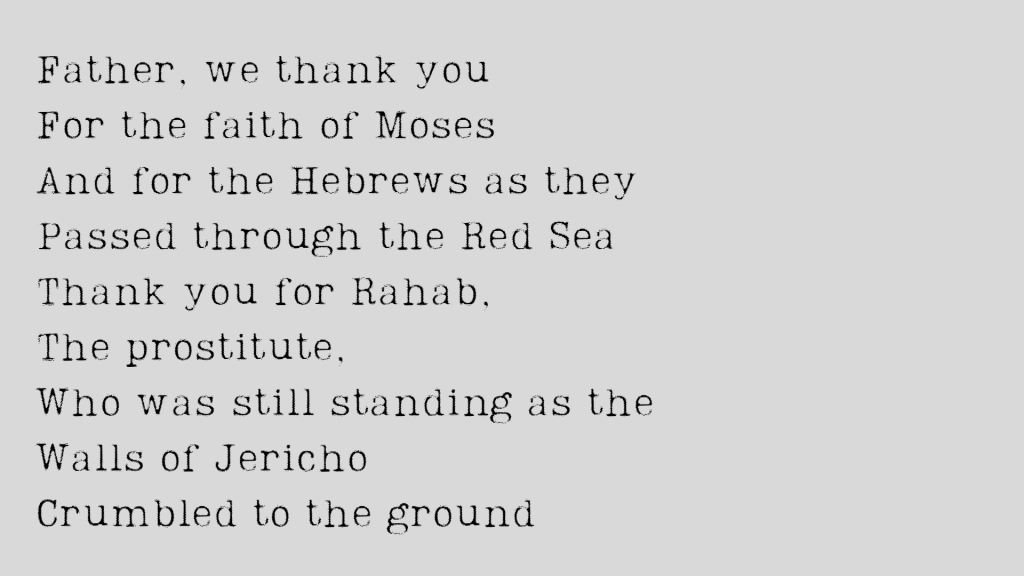
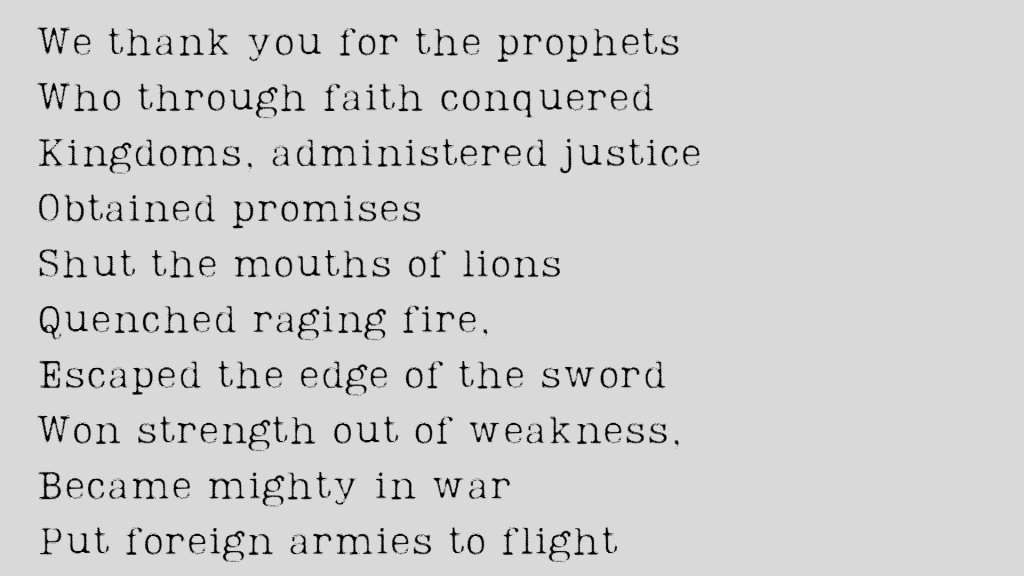
It took five women to change the course of history. These five women did what had never been done. Five women who, as far as we know, did not receive direct instruction from God, still, followed God in the midst of their day to day survival. Five women took extreme personal risks that they didn’t really have to take. Five women risked their lives, and, along the way, unknowingly changed the world. Five women did what their gut told them to do even if it was dangerous, not just for them, but dangerous for those closest to them. Five woman saved the Israelites. Five women saved a group of humans, humans that were a fulfillment of the promise to Abraham, a promise of a people, a people we, today, know as the Jews.
These five women did this extraordinary feat without any fanfare, without any substantial assistance, without any visible concern for their own safety, without support from, or even knowledge by, their community. Five women who simply stepped out and did what needed to be done. Five women who acted in historic ways, doing so merely out of their daily existence, their daily survival. Five women who were the sounding pistol declaring that the deliverance of the Israelites had begun. Five women who saved the lineage of Jesus.
Five women in a story that begins with two men. The first, was a newly enthroned ruler, Pharaoh.
This new Pharaoh was on the throne, a ruler who had an Israelite problem, there were simply too many of them, they were like wild animals in the street, and they were multiplying like feral dogs. This Pharaoh was brutal and had no appreciation for the Israelites. His ignorance of the history of his own people was staggering, his focus was himself, he was his own god – this was the god that instructed him how to secure his power, how to eliminate threats to his power, how to eliminate ‘problems’ immediately. His paranoid ‘god syndrome’ fueled existence mandated that he have all the answers needing no assistance, no one could be trusted, no one – anyone could be fired, eliminated, at the drop of a hat, at the hint of unloyalty, at the need of a scapgoat, the only characteristic of a worthy employee was blind acceptance of Pharaoh as ‘god’. His unwillingness to grasp even the most basic aspects of the history of his people led him to act with blatant disregard and reckless abandon. In a turn from wiser and the more stable rulers before him, he had no appreciation for, or even knowledge of, the Hebrew deliverer Joseph, nor did he have any respect for the God of Joesph and his people the Hebrews, the Israelites. He had no fear of this God who had shown himself in such a mighty way in the history of his people – his fear was of men, not God, a fear of what men could take from him.
The other male, a three month old Hebrew infant, was named Moses.
But, it was five women who were the heroes of this story, they were the first to be called by God, they were the first to take the deliberate and risky actions, they were the first, in this story, and the case could be made that they were the first in all of the Bible stories up to this point, to step out based on a faith conviction that this was actually not really a choice at all – it was life guided by faith. It was their daily life.
Let’s meet these heroes.
We begin with Shiphrah and Puah, two Israelite women, midwives who served their own people, the Hebrews. They were summoned out of their day to day existence to appear before this Hebrew hating ruler. Being summoned is seldom a positive for an oppressed person, it is devastating when it come from a brutal powerful ruler. Pharaoh ordered the midwives to kill all of the male children born of Hebrew women. These two women who had dedicated themselves to God’s calling to bring life into the world, now were given the order to take that life instead. However, these women were dedicated to their calling, to life, and more than that, they feared God. They disobeyed, and when summoned again, Pharaoh asked why he is still seeing Hebrew newborn boys. These two women in the work of life were now facing their own death, still, they stood their ground, standing on their faith, blaming the quick labor of the Hebrew women, as the reason for their inability to stop these forbidden births.
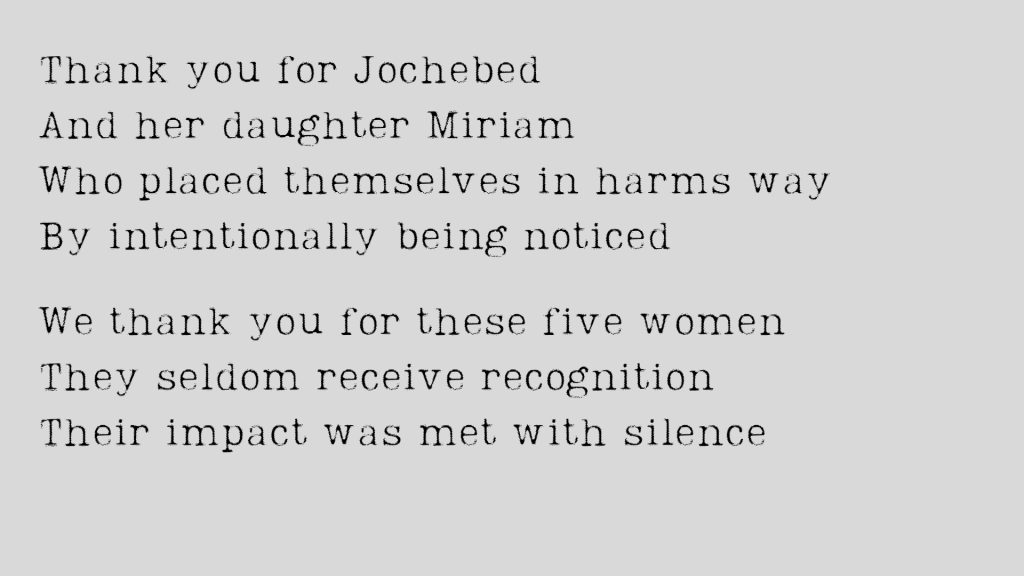
Two more Hebrew women, Jochebed, and her daughter Miriam, are the next audacious heroes of this story. Jochebed had nursed and hidden her son, Moses, for three months after hearing of Pharoah’s edict to put to these Hebrew boys to death by being thrown into the vicious Nile river. Ironically, the newborn female infants were allowed to live, they were not a threat – Pharaoh had no clue of the threat of his own misogynistic ingrained prejudices were to his power. Jochebed and Miriam hatched a bizarre plan that would only work if God was a part of the action. Jochebed and Miriam, as ordered by Pharaoh, ‘threw’ their beloved Moses, into the Nile River – however, before ‘throwing’ him into the river, they placed him inside a basket that had been retrofitted to float. They prepared the basket, they put the infant Moses into the basket, and they let go of it into the river, releasing their control, surrendering it into the hands of a God they didn’t really know a lot about.
Our fifth heroic woman now enters the picture, a woman named Bithiah – an Egyptian, non Israelite, non Hebrew woman who was also the daughter of the brutal and paranoid Pharoah. She was bathing in the river when she saw a basket floating in the water. Ordering one of her attendants to retrieve the basket she was surprised to find a child neatly tucked into the basket. Bithiah immediately recognized that this was a child of a Hebrew woman, and, presumed that this child had been released into the unpredictable waters of the Nile in order to save the life of this little boy.
It boggles the brain to think of the journey of this outrageous faith engineered plan which called for a mother to save her son by placing him into a basket, then placing the basket into the very river where he was ordered to die, a plan which ended with the child being rescued by the daughter of the very man who ordered the death of this infant, and, ultimately having this child raised in the very palace where this same brutal ruler lived, his own home…..and, all of this, is still decades before this same child, raised in the home of the ruler who sought his death, would deliver the Israelites from the brutally of the following Pharaoh.
We cannot leave this story of these five heroic women without looking at one final act of bravery. Jochebed, and her daughter Miriam, allowed themselves to be noticed – again, it is best to go under the radar, unnoticed, when you are an oppressed person. It would be nearly impossible to consider the possibility that Bithiah naively accepted the appearance of Miriam as serendipitous. In doing this, both of these Hebrews put their own lives, as well as their families and the life of this beloved infant, in jeopardy. They had allowed themselves to be noticed – this plan of faith required not only risk and release, it required that they place themselves in the crosshairs of a powerful, brutal, and paranoid, ruler.
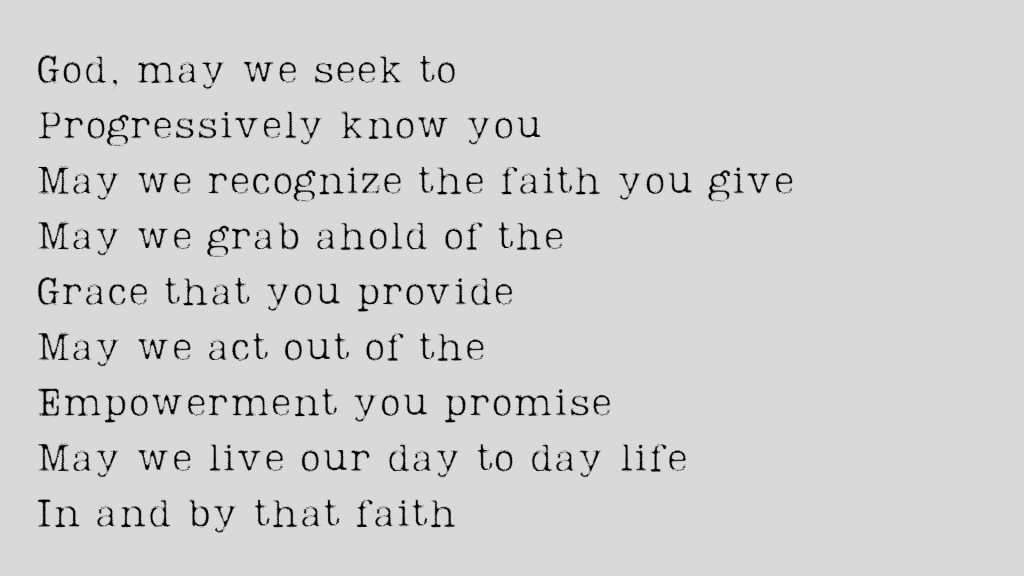
Five women against a powerful man who was was dismissive and assuredly misogynistic. Five women who were considered powerless and weak by a ruler that set out to destroy an entire people. Five women who began a movement that resulted in the deliverance of that people. Five women who were guided by faith, five women given the faith to answer the call, five women empowered with the grace to act on the call, five women who changed the world.
Five women whose faith that set the bar for a grown Moses, who, on ten specific occasions would be called upon by God to speak on behalf of God, to confront a man who consider himself to be a god.
So, what is faith? How do we obtain faith?
We had a family living next to us who had a daughter with a disability from birth. She was, confined to a wheel chair and, every two years would have to enter the hospital for an extended stay during which she would go through a harrowing physical treatment to attempt to restore her health, as much as possible. A treatment much like the worst chemotherapy experience that you can imagine. It was traumatizing for her and her family just to go through this. She, along with her family, attended a church, where the pastor would often speak of our level of faith being our responsibility, ie. ‘If you are poor it is because you do not have enough faith, if your marriage is failing it is because you do not have enough faith, if your house is too small or you hate your job or your kids are a mess it is because you do not have enough faith,’ and frequently, he would preach in the direct eyesight of this little girl, ‘If you are sick it is because you do not have enough faith’. One Sunday as he began going down the path of this heretical teaching about faith, the siblings of this girl stood up from their seats, and non apologetically moved to the center aisle, turned their sister’s chair around, and pushed her to the exit door. At the point, the parents, as they shared later, finally realized that they should have done this years before.
When this little girl completed the fifth grade, approaching the summer when it was time for another hospital extended treatment, she explained to her parents that she was ‘done’. She had made the decision to do no more treatments. When I say ‘ready’ this little girl had a clearer understanding of life and death, of eternity, than probably most adults. She was truly ‘ready’. The family grieved but understood and honored her decision. By the start of the next school year she had passed away.
This was knowing God enough in life that she was able to trust God in death. This was having enough faith.
‘Now faith is the assurance of things hoped for, the conviction of things not seen. Indeed, by faith our ancestors received approval. By faith we understand that the worlds were prepared by the word of God, so that what is seen was made from things that are not visible.’
Hebrews 11:1-2 (NRSV)
Five problematic words made this statement difficult for us to fully grasp in our English language state of mind, and our own tendency toward a selfish theology when interpreting scripture:
Assurance, Things, Hoped, Conviction, Received Approval
While a greek word study of these two verses written to the early Christians who had a Jewish background would give us a clearer understanding of the meaning of this passage – Eugene Peterson, author of The Message, does a superb job of explaining these words through his translation:
“The fundamental fact of existence is that this trust in God, this faith, is the firm foundation under everything that makes life worth living. It’s our handle on what we can’t see. The act of faith is what distinguished our ancestors, set them above the crowd.”
Hebrews 11:1-2
Take a moment to look at, and consider, these words again.
“The fundamental fact of existence is that this trust in God, this faith, is the firm foundation under everything that makes life worth living. It’s our handle on what we can’t see. The act of faith is what distinguished our ancestors, set them above the crowd.”
Hebrews 11:1-2 (the Message)
It was this firm foundation that allowed the five women to save the life of Moses. It was the fundamental trust they had in the known but unseen God (actually for one of the women, God was unseen and unknown) that permitted them to accept the risk of saving this life.
It was this fundamental faith that had consistently allowed this little girl to trust God with her life, now leading her to trust God with her death.
As the apostle Paul is teaching the believers in Rome how to be ready to live like the five women who saved Moses, and, how to be community at the same time, he says,
“For by the grace given to me I say to everyone among you not to think of yourself more highly than you ought to think, but to think with sober judgment, each according to the measure of faith that God has assigned.”
Romans 12:3
We are not the master, or developers, of our faith. We do not grow our faith, we do not strengthen our faith, we do not own our faith, we do not determine our faith.
Faith is what permits us to answer ‘yes’ to God’s call – whether it is to respond with disobedience to a brutal Pharaoh with a god complex, or to let go of a basket into the Nile River in order to save the life of your child, or to painfully accept your Father’s plan to save the world.
When God calls, or leads, or intentionally places us on the path where he needs us to be, then it is not a question of ‘Enoughness’, it is not ‘do we have enough faith to answer, or to follow, or to trust’ – it is a question of ‘do we trust the God that we know, to give us the exact needed measure of faith to do what he calls us to do?’.
Jesus was not asking this as a test to see if his disciples had been paying attention in class, nor was it reprimand them for their ‘lack of faith.’ He was asking because he was now heading to Jerusalem, he was at a fork in the road where the direction of his physical journey was lining up with his journey to the cross. While this would ultimately be a solitarily journey that Jesus would have to travel alone, he was fully aware, though, that on the way, his disciples would be at his side. They would be going as far as they were able to go. To travel with him the distance they were equipped to travel, they would have to be ready to grab ahold of the measure of faith that God was giving them. To face the pain and struggles ahead, this faith was going to be essential.
To grasp this faith, they needed to be standing on an unshakable foundation, a foundation of truly knowing God.
“Who do you say that I am?” Jesus asked.
“You are the Messiah, the Son of the living God.”
Peter
Jesus smiled the smile of the Father, knowing that Peter was ready to face the horror that lie ahead, he would make mistakes, but in the end he would realize that he was standing on a Rock. Jesus proclaims to Peter, “God has revealed this to you! The father has given you enough faith.”
a prayer together for 08.16.20




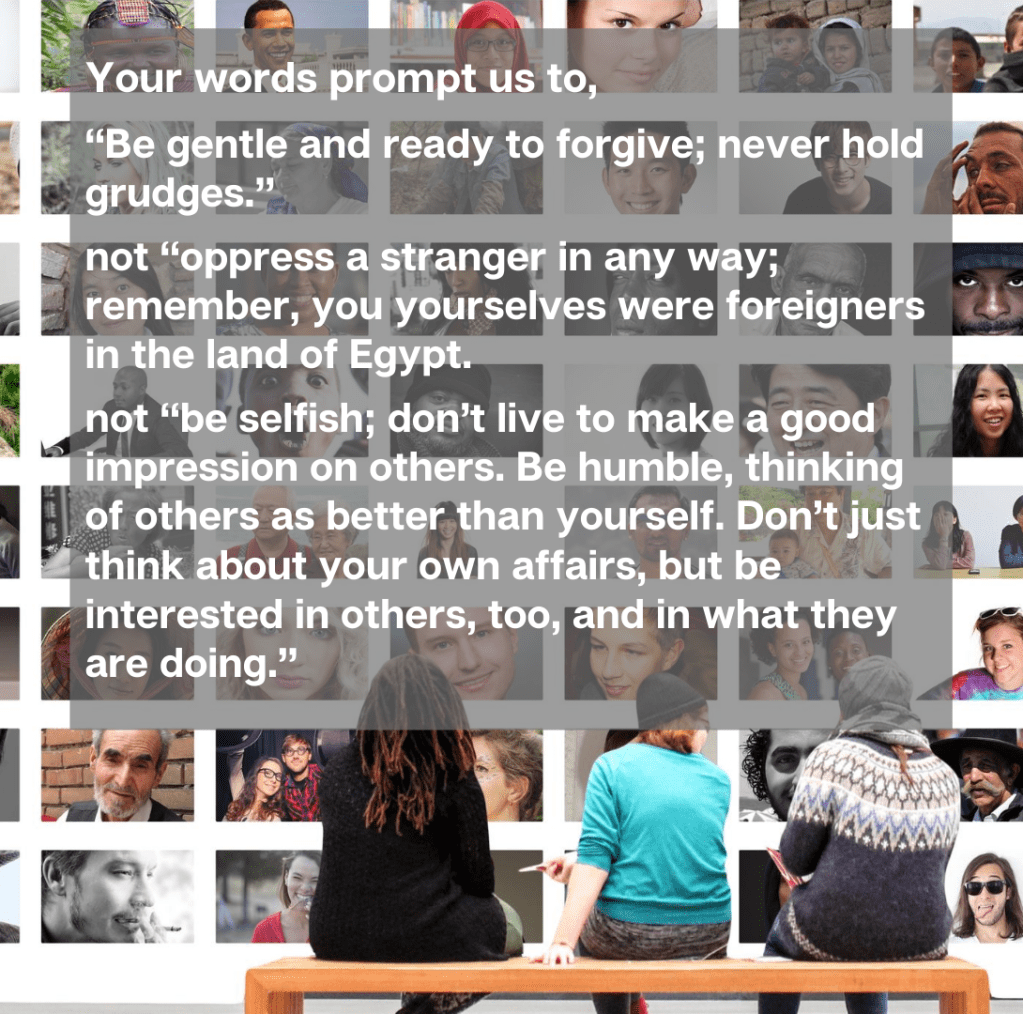


Have you ever been around someone that you never have to guess what they were thinking or feeling? What they were thinking, their thoughts, dreams, hopes, excitement, emotions, always on display? It is a character trait that is both annoying and endearing? You can bask in who they are, or you dismiss them and try to avoid them. I think Joseph was one of those people.
Joseph is one of the most illuminating figures of the bible. We are given not only the historical accounts of his life, which are horrifying, but we also get to see the emotions, the fears, the disappointments, and the joy.
Joesph has multiple meetings with his brothers, were did the unthinkable to him, and are oblivious to his identity. Joesph comes to a point where he cannot hide his joy and excitement anymore. He has all this joy and happiness inside of him that he can only keep pushed down for so long until he pops.
For Joseph, faith was faith, and faith was life. He didn’t have to force it. His faith was what came forth from his life. The first time we see God even referenced by Joseph is in jail when he explains to other prisoners that dream interpretations come from God then, a second God reference is of the same substance, but for Pharaoh. While there is not much dialogue from Joesph proclaiming God, his life serves as a megaphone abut God. God comes forth in the life of Joseph.
‘God coming forth’, is exactly what Jesus is talking about in the first part of our gospel reading Jesus says.…
As I mentioned in our passage primer this week, there are several aspects of Matthew 15 with which I struggle. This statement from Jesus, ‘to eat with unwashed hands does not defile,’ is one of them, especially during our current pandemic. However, what is seen and/or heard immediately from this statement is not what Jesus is saying. He is not mounting an anti-hygiene protest, nor is he revealing that he has bought into an extremest conspiracy theory.
The earliest findings of any types of hygiene guidelines and laws date back to the Exodus when God, through Moses, gave the Israelites instructions on everything from washing their hands, to the disposal of human waste. These hygienic practices were a religious responsibility. About half a century later, under King David, these practices were expanded from being religious to being a societal practice.
More than any other people, personal hygiene was a founding principle of the Israelites, and Jesus was not contradicting this. Jesus was talking about something much deeper, he was addressing what we allow to exist inside of us, that which influences and changes what we put into ourselves.
A couple of weeks ago, I referenced our experience a decade ago with our daughter Grace spending 11 days in the hospital with Steven Johnson’s Syndrome, a severe, often fatal, reaction to medication. What I did not mention was that she, along with our son Caleb, had been taking the same medicine for the same sickness, for the same amount of time. Caleb had no problem with the medication and within a very short time was feeling better and back to normal. However, something in Grace’s system influenced the otherwise ‘okay’ medicine rending it toxic.
This is what Jesus is saying. Everything in our life is influenced by what is already at our core, what is inside of us. We put relationships into our life – they can mix with our insides and come out as a healthy lasting relationship, or they can come out as adultery and fornication. We put communication in, it mixes with our inside, comes out of our mouth as unifying and encouraging words, or it comes out as false witness, gossip, and slander. Our heart, our core, takes the non defiling things we put into our life and determines if they come out beneficial or harmful.
It all depends on what we allow to be inside of us.
Jesus is challenging the standard religious thought, especially as established by the institutional leaders. He is telling them that transformation does not take place by our practices alone, or anything that we think we must, or must not, do to be right with God. It is much deeper, it is that which comes forth from us that identifies that our heart, our core, what is our center.
Let’s get into this a bit deeper by looking at one word, the word that provides the true challenge of Jesus’ message – the word ‘DEFILE.’ The greek, in this context is κοινοῖwhich means ‘to defile’. The root word, which gives us clarity of the meaning of ‘defile’ is koinoó , which, in certain context can mean ‘to make unclean, pollute, desecrate’. Now, if we go deeper to the literal meaning of the root word, the word from which these all use in their particular context, ‘to make common.’

As we have witnessed in Matthew’s gospel, when it moves to another story or teaching, as we ‘move on’, ‘moving on’ is never ‘moving away’.
Jesus now travels to the major Roman port cities of Tyre and Sidon, home to countless pagan temples, populated largely by gentiles but sizable Israelite population resides there as well.
Remember, there is an intentionality of the chronological order in Matthew’s gospel, teaching moments are often followed by an experiential lesson as well.
As Jesus, and his disciples, enter the area, they are immediately confronted by a Canaanite woman who is shouting, ‘Have mercy on me, Lord, Son of David; my daughter is tormented by a demon.’ Jesus’ response is odd, it is very suspect, it is very ‘un-Jesus’ like. He dismissively ignores the woman, then, as she continues to make a spectacle of herself by screaming, the disciples join in suggesting that Jesus send ‘that shouting woman’ away. Jesus responds to the suggestion by pointing out that ‘I was sent only to the lost sheep of the house of Israel.’ She then gets in front of Jesus, kneels, and begs, ‘Lord, help me.’ Jesus responds with the seemingly racist and callous response of ‘It is not fair to take the children’s food and throw it to the dogs.’ The woman replies to Jesus with, ‘Yes, Lord, yet even the dogs eat the crumbs that fall from their masters’ table.’ Now, she has Jesus attention as indicated by his response, ‘Woman, great is your faith! Let it be done for you as you wish.’ After this, we are informed that, at that moment, her daughter was healed instantly.
The change in Jesus posture with the woman, as well as a positive and affirming response, signals that something significant has just taken place. I wouldn’t be surprised if the disciples share a look of confusion with each other.
This interaction just seems to increase in the odd and bizarre factor as this conversation progresses.
Let’s dive in and break this engagement down.
We begin by looking at Jesus’ initial response to the woman – he ignores and dismisses her, while the disciples, thinking they have picked up on a subtle cue meant for them, join in by urging him to get rid of her. This opening action, or inaction, on the part of Jesus was intentional, it was targeted, it is was a signal that this is going to be a teaching moment aimed at, not the woman, but the followers of Christ. He is using the moment to teach his followers, particularly his disciples, what he had just verbally taught about in the earlier verses. As the woman shouted, what was inside of the disciples, and probably inside the crowd as well, began to take hold, they thought the gate had been open to let their own attitudes come forward, it could no longer be held back, it all came pouring out out of their mouths, ‘Just send her away, Jesus!’
In these brief four words, the disciples revealed a bigotry and a prejudice against the woman, as ‘all her kind.’ They, unconsciously formed a hostile attitude toward the woman because of her nationality, her color, her ancestors, basically ‘who she was.’ In the most blunt of terms, they were revealed that they were racists. We know that because her requests, and methods, were nothing new, thousands had come to Jesus doing the same thing for the same reason, probably, many who were also shouting – the disciples didn’t suggest sending them home, well except for when there were too hungry, when they became a burden. This time was different, this time it was a pushy Canannite, woman, a gentile. Sure, the gentile centurion had come to Jesus on behalf of his servant for healing, maybe, the servant was even a gentile. The difference, though, in that gentile situation and this gentile situation was all about presentation (or so they would have claimed), that man, the Centurion, knew how to act, he was respectful, he knew the words to say, it knew how to act right. He was following the unspoken rules that you follow as a gential and addresses a Israelite. This Canannite gentile Woman either didn’t know how to act correctly, normally, or she did but just refused to do so.
So, Jesus echoed the mind and heart bigotry of his disciples and followers, ‘I was sent only to the lost sheep of the house of Israel.’ While this was true, the promise to Abraham and passed down to Jacob, did declar that all people would be blessed by the Israelites, Jesus coming to heal the Israelites would, conceptually, enable them, the Jews to go to the gentiles. While accurate, it was not true to ‘who’ Jesus was, and they should have known this by now. Sometimes, it is impossible to even realize what we have allowed to be hidden in the dark places of our heart and mind – especially racism and bigotry.
The disciples did not, and at this point could not, empathize with the woman, something in them did not want to. So they hated and despised her – Jesus let them see this as he opened the gate for these things to come forth from out of their lives. He echoed their thoughts, he mirrored their darkness.

While the disciples only saw a non-Jew, a non-Israelite, and a non-male; what they did not see was that this oppressed and desperate woman was a Canannite, she, like Rahab, Tamar, and Ruth, all shared ancestral connections with Jesus.
Next, we see the woman quickly move ahead of the still walking Jesus, and kneel in front of him, probably in deference bowing her head to the ground, blocking his way so that he has to stop. The response of Jesus to the woman’s repeated cry for help is to say, ‘It is not fair to take the children’s food and throw it to the dogs.’ These words too, are not the mean spirited words they sound to be. The gentiles held a much different attitude towards animals. While the Israelites may have had animals around as a necessity, the gentiles endeared the animals they had as beloved family pets. So, the phrase ‘dogs’ would not have been taken as the insult it sounds to us – it was a description of the immense difference in the faith and religion of the Israelites and the scattered and dysfunction of the faith practices of the gentiles.
Her response is an unveiling of her unbridled faith, as well as of the expansiveness of God’s love and Jesus’ ministry. In saying, ‘Yes, Lord, yet even the dogs eat the crumbs that fall from their masters’ table,’ the woman exposed her understanding of God, God’s love, and of her own belovedness by God.
She was saying, ‘yes, I know you came for the Israelites, but, I also know that you are enough, and have enough grace, for me and all peoples.’
Jesus is blown away by the heart and core of this woman as he sees what comes forth from her, as evidenced by his response to her, ‘Woman, great is your faith! Let it be done for you as you wish.’ He sees a faith that empowered by what is inside this woman.
This woman, who didn’t look like one that Jesus had come for, she didn’t wash her hands as part of a religious ritual, she didn’t observe the dietary laws or think certain foods were unclean, she didn’t have the right ‘pure’ bloodline, her nationality did not hold the power her oppressors held, she may have not been the acceptable color, she didn’t live in Jerusalem nor was she allowed in the temple, in all honesty, there are countless ways that she did not fit the proper mold of a faithful follower of Jesus…..unless you were able to see her heart, or if you were to be there, like Jesus was, when what was inside came forth.
Let’s look at this in a practical way, from a historical event, to see how what is inside comes out, and what comes out positively or negatively impacts all that are in a part of our journey.

On November 14, 1960, a US Marshall’s vehicle pulled up in front of the New Orleans home of Abon and Lucille Bridges to escort their 6 year old daughter to William Franz Elementary School. Little Ruby was wearing new dresses, socks, and shoes and ready for her first day of school.
As Ruby, and the Marshalls, arrived at the school, they were met by an angry mob. John Steinbeck, who was there to witness the moment, later wrote about what he had observed, specifically, he wrote about a group of women at the protest whose picture had been seen nation wide, –
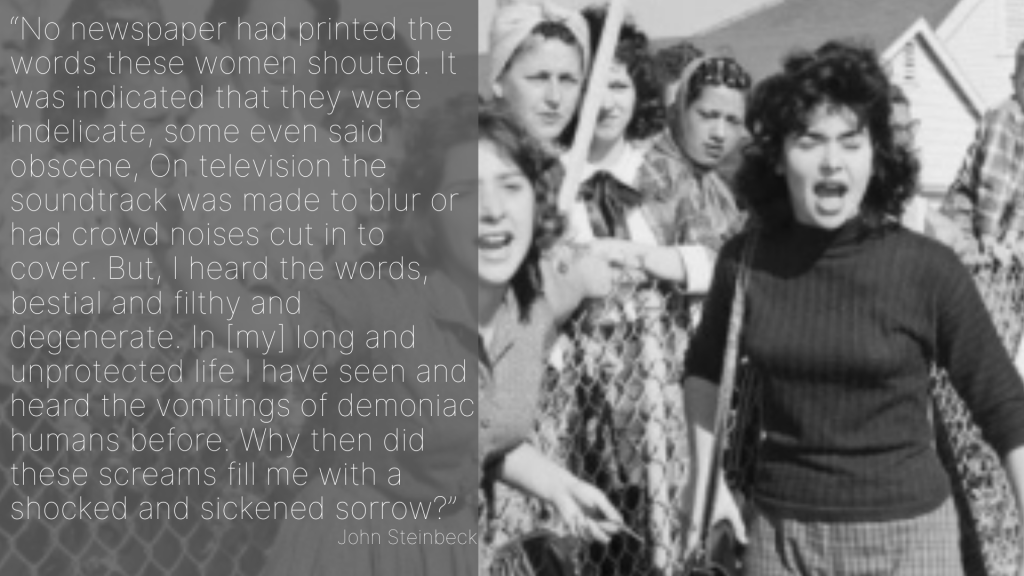
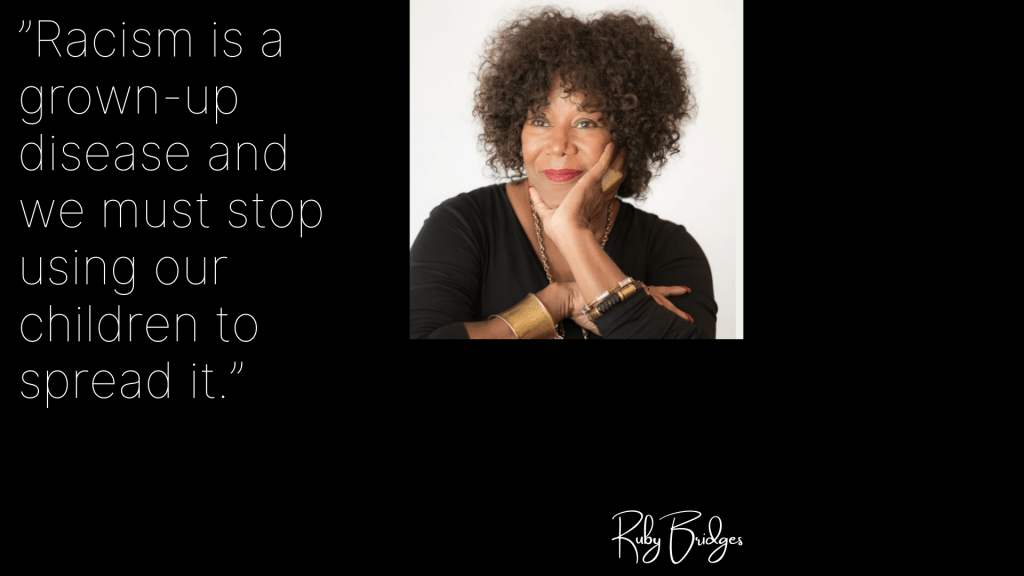
Ruby was one of three children that integrated the public school system in New Orleans in 1960, however, Ruby was by herself at William Franz Elementary School. She spent the year traveling to and from school in the vehicle with the Marshalls, who in between would go back to her street to protect her house and parents. Lucille and Abon, her parents, suffered that year as he lost his job as a gas station attendant because of Ruby; their grocery store would no longer her family shop there; her sharecropper grandparents in Mississippi were turned off their land. Most parents removed their children from the school the day that Ruby arrived. Ruby, walked in through the screaming mob every morning and every afternoon. In between, she was alone in a classroom, just her and Barbara Henry, her teacher, brought in from Boston.

Now, as an adult 60 years later, Ruby shares life lessons she learned from that year, and her subsequent life, how those who didn’t join the hateful mobs made a huge difference in her life, ‘many others in the community, both black and white, showed support in a variety of ways. Some white families continued to send their children to Frantz Elementary despite the protests and danger, a neighbor provided her father with a new job, and local people babysat, watched the house as protectors, and walked behind the federal marshals’ car on the trips to school.’ It was not until Bridges was an adult that she learned that the immaculate clothing she wore to school were donated to her family by a white relative of Dr. Coles, her volunteer psychiatrist.


What is coming forth from us?
What is coming forth from you?
Are you, are we, settling for ‘common’?
Let’s pray.
a prayer together for 08.09.20





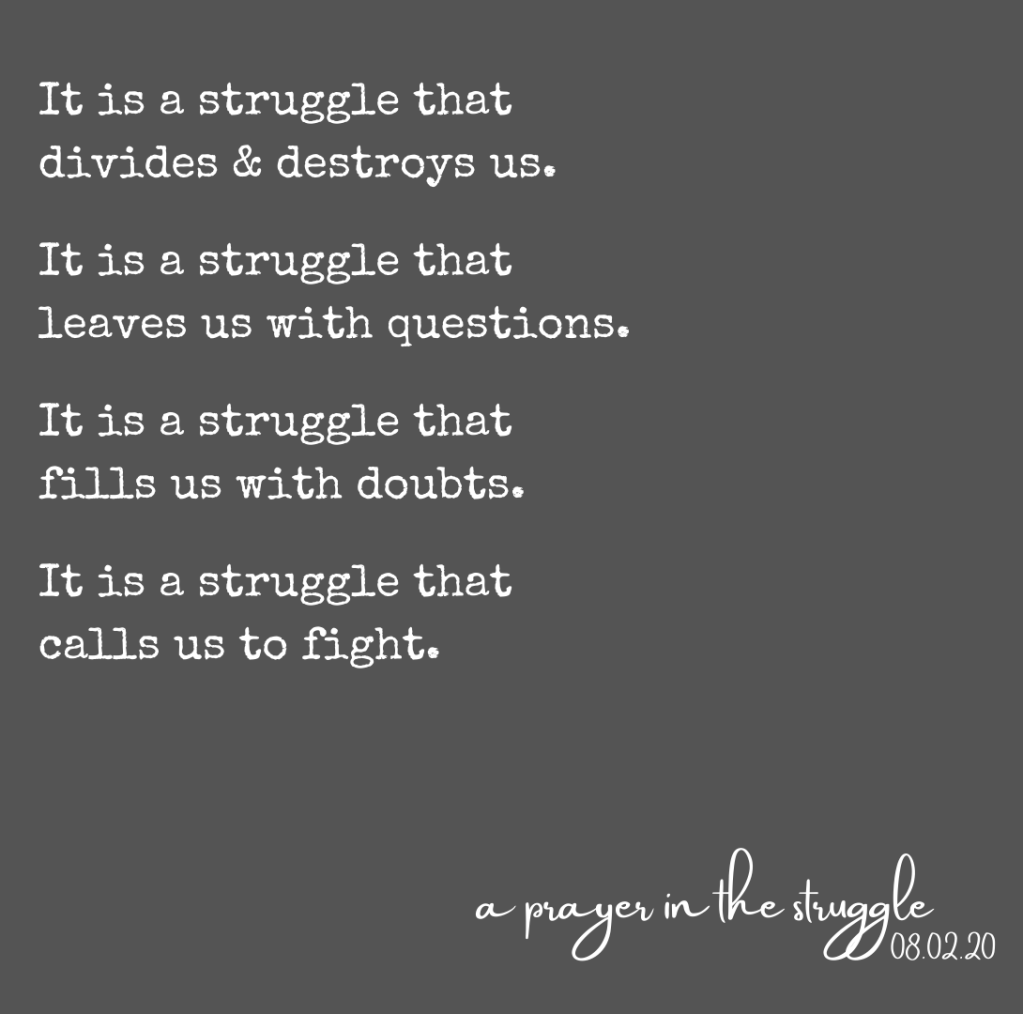
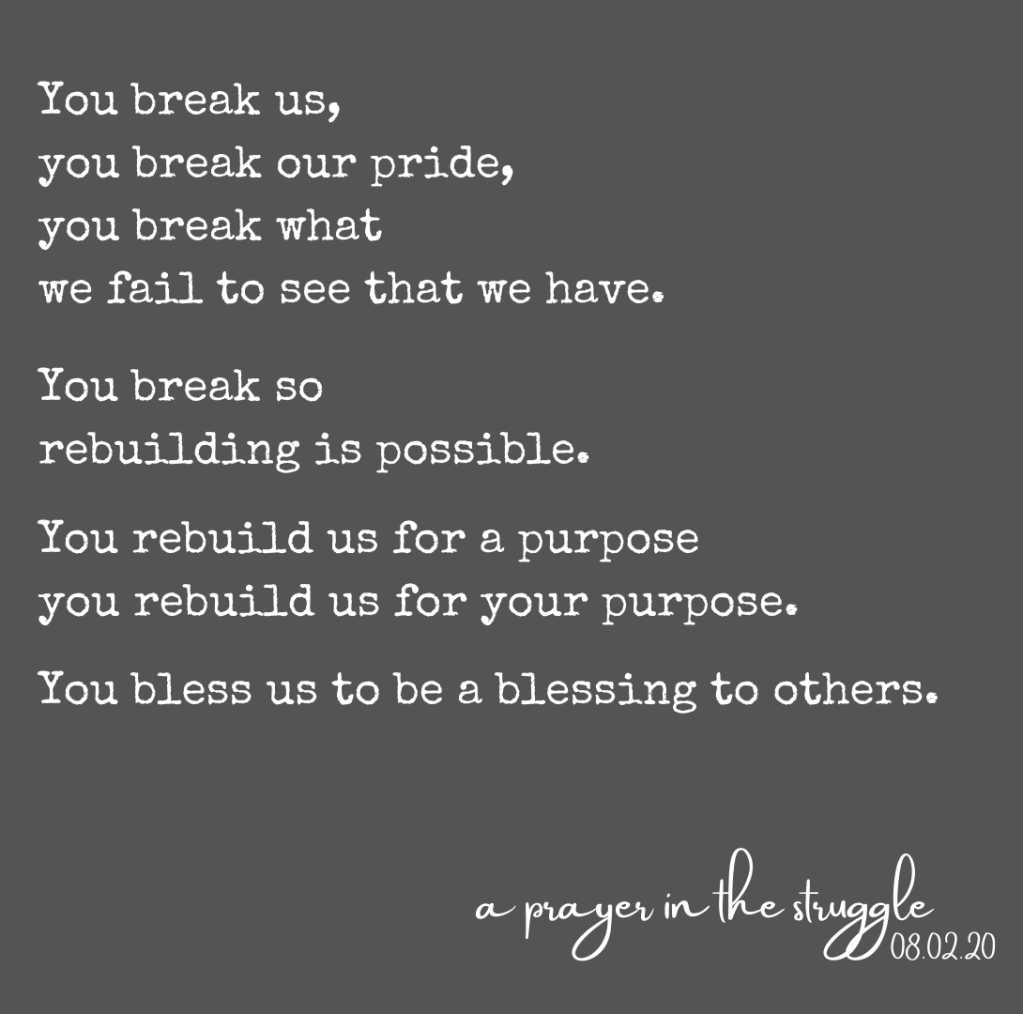
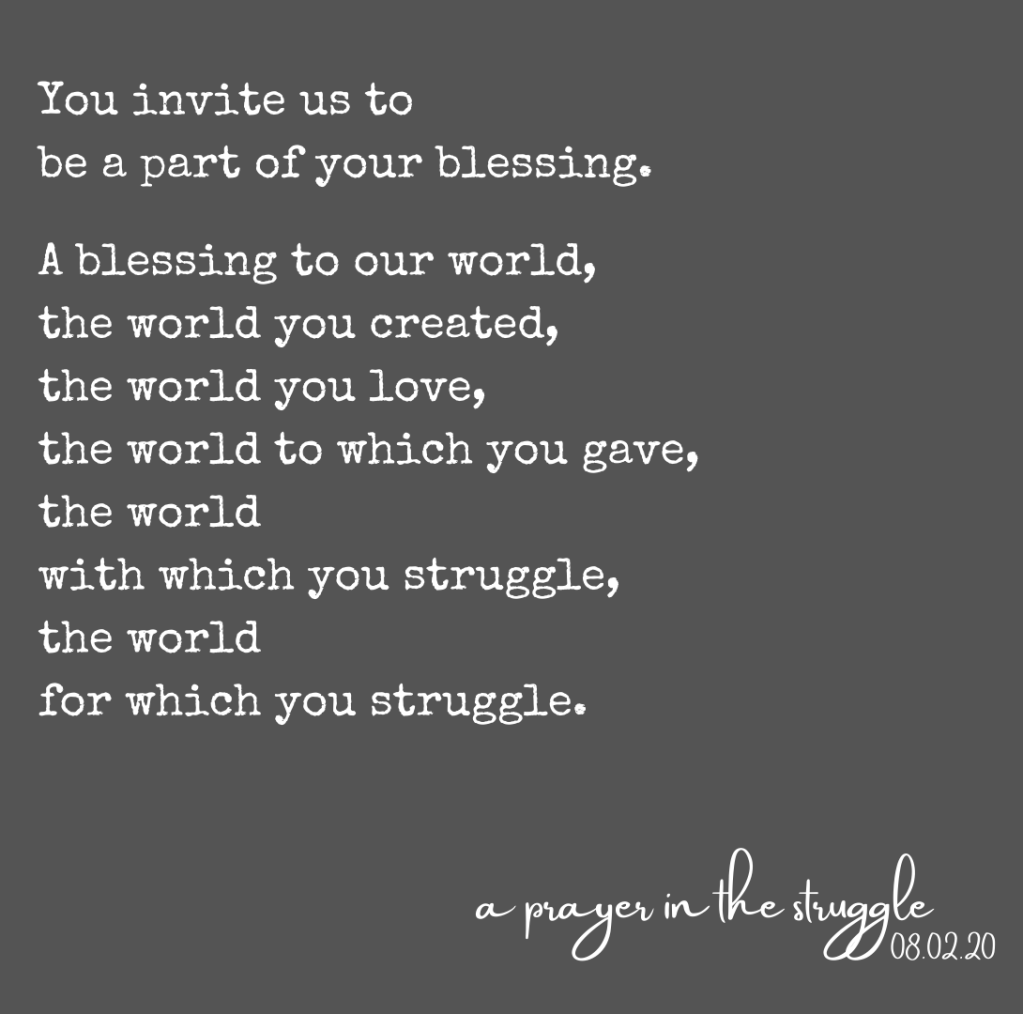
Prayer together for 08.02.20





07.26.20







 richard alan anthony